Axon invests $1.2 billion in Skydio for police drones: what it means and why the stock fell
Axon is investing $1.2 billion in drone maker Skydio and becoming its exclusive public safety distributor in the US and Canada. Here's how police drones work and why Axon's stock fell.

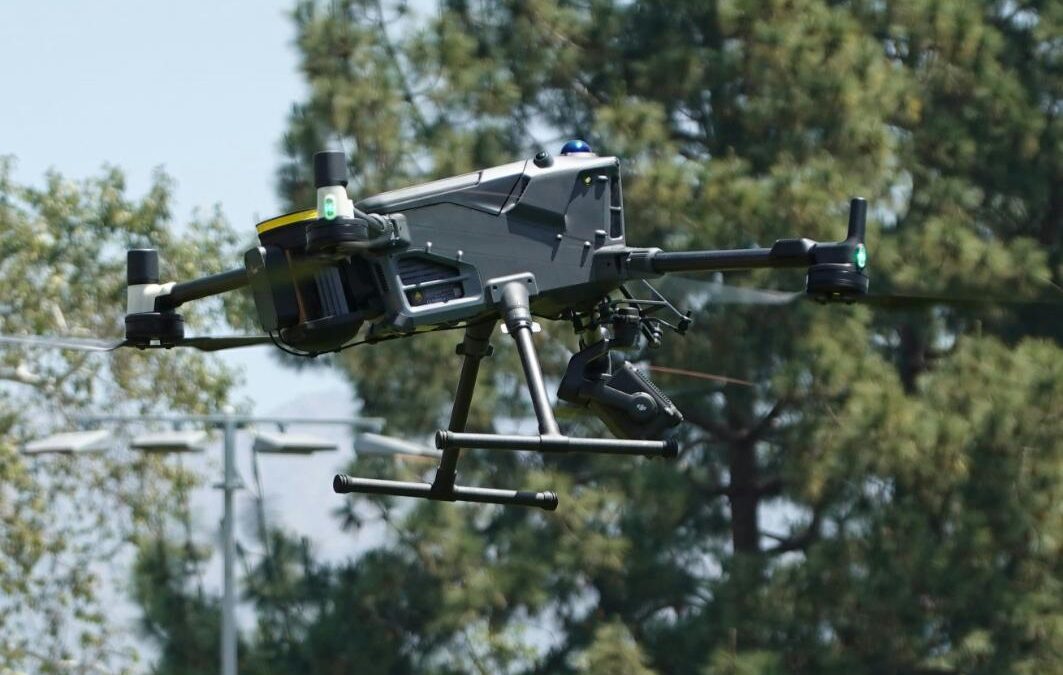
Police drones are becoming big business. Axon, the company behind Taser and police body cameras, is investing about $1.2 billion in drone maker Skydio and will become its exclusive public safety distributor in the US and Canada. The goal: drones that fly to emergencies before police officers arrive. But Axon’s stock fell sharply on the same day, after it also lowered its growth forecast. Here’s what the deal means.
What is the deal?
According to the companies’ announcement, published by sUAS News:
- Investment: about $1.2 billion in a mix of cash and Axon stock
- Valuation: Skydio is valued at $5.2 billion before the investment
- Ownership: Axon adds roughly 20% to its stake. According to Tech Insider, its total stake rises to about 37%
- Exclusivity: Axon becomes Skydio’s exclusive distributor for public safety (police, fire and emergency services) in the US and Canada
- Timing: expected to close in Q4 2026 and Q1 2027
Part of the money goes to Skydio as new capital for product development, and part buys shares from existing Skydio shareholders.
What is “drone as first responder”?
Drone as First Responder (DFR) means a drone sits in a dock on a rooftop. When someone calls emergency services, the drone launches automatically and flies to the scene, sending live video to police or firefighters before they arrive. According to the announcement:
- Skydio serves more than 1,500 public safety customers.
- More than 28 million Americans live within two miles of a Skydio DFR dock.
- Agencies using Skydio DFR have cut priority response times by up to 65%.
- Drones reach the scene before officers on about 80% of calls where they are used.
Axon estimates the US and Canadian DFR market at about $13 billion.
“Two companies, each the best at what it does, will build something far bigger than either could alone.” Rick Smith, Axon founder and CEO
Skydio CEO Adam Bry said the investment “strengthens our ability to accelerate our technology roadmap.” Skydio expects about $1 billion in total bookings this fiscal year.
Why did Axon’s stock fall?
According to AI Weekly, Axon shares fell about 18% on the news. The main reason wasn’t the Skydio deal itself, but Axon’s lower growth forecast, announced the same day. According to Tech Insider:
- Axon now expects about 30% revenue growth in 2026, down from 32% to 34%.
- Full-year 2026 revenue is expected at $3.61 billion to $3.63 billion.
- The cut came after Axon removed three federal Dedrone (counter-drone) projects worth about $130 million from its 2026 forecast. It’s not clear if they were canceled or delayed.
Some investors may also be concerned about the size of the investment and Axon paying partly in its own shares. The broader tech selloff this week added pressure too.
ByteTidings does not give financial advice.
Why is this happening now?
Several things are pushing police drones forward:
- Restrictions on Chinese drones. US agencies have been moving away from Chinese-made drones like DJI’s over security concerns, which helps American makers like Skydio.
- FAA approvals. According to Dealroom, the FAA had reportedly cleared more than 1,000 agencies for these kinds of operations by early 2026.
- Competition. Rival BRINC raised $125 million in July, led by Motorola Solutions, according to Dealroom.
Drones are being used for much more than policing, too. Delivery drones are expanding fast, as we covered in our article on Zipline’s $1.5 billion raise and Walmart deliveries.
Questions people are asking
More drones over cities bring benefits, like faster emergency responses and safer situations for officers. They also bring questions about privacy: who can see the video, how long it’s stored, and when drones can fly over homes. Rules differ by city and state, so it’s worth checking your local police department’s drone policy if you want to know how it works where you live.
What it means for you
- If you live in the US or Canada, police drone responses are likely to become more common in the next few years.
- For the drone industry, this is one of the biggest bets yet on drones as everyday public safety tools.
- For investors, Axon’s drop shows that markets care about near-term growth as much as big future bets.
Frequently asked questions
How much is Axon investing in Skydio?
About $1.2 billion in cash and stock, at a $5.2 billion pre-money valuation for Skydio, according to the companies.
What does the Axon Skydio deal mean?
Axon becomes Skydio’s exclusive distributor for police, fire and emergency services in the US and Canada, and invests money to speed up Skydio’s drone development.
Why did Axon stock drop?
Axon lowered its 2026 growth forecast to about 30% on the same day, after removing about $130 million in expected federal counter-drone revenue. Reports say shares fell about 18%.
What is a drone first responder?
It’s a drone stationed in a dock that launches automatically when an emergency call comes in, flying to the scene and sending live video to responders before they arrive.